
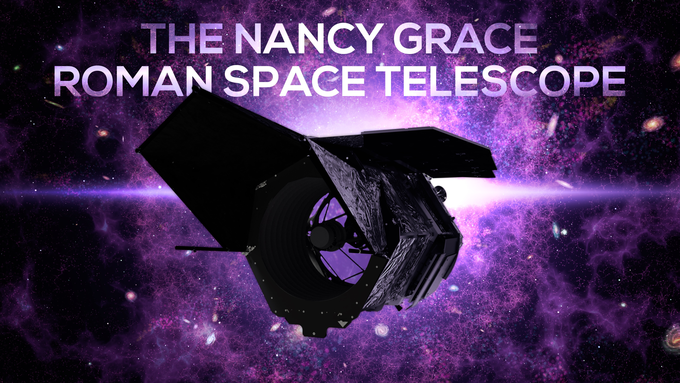
The Nancy Grace Roman Space Telescope is a NASA observatory designed to settle essential questions in the areas of dark energy, exoplanets, and infrared astrophysics. The telescope has a 2.4-m primary mirror, the same size as the primary of the Hubble Space Telescope (HST). The Roman Space Telescope will have two instruments, the Wide Field Instrument, with a field of view that is 100 times greater than the HST WFC3/IR, and the Coronagraph Instrument technology demonstration, which will perform high contrast imaging and spectroscopy of individual nearby exoplanets. Roman will have a primary mission lifetime of 5 years, with a potential 5 year extended mission. Preparations are on track to target a launch in September 2026 and no later than May 2027.
With the recent definitions of the Core Community Surveys, and the Galactic Plane Survey, the frontiers Roman will explore have expanded. This Caltech/IPAC workshop will take place July 13 through 16, 2026, and is being organized and hosted by the Roman Science Support Center. The goal of this conference is to bring members of the community together to focus on the new exciting landscapes poised for potential breakthroughs using the Roman surveys with the Wide Field Instrument, as well as on the Coronagraph Instrument.
We will cover topics across all types of Roman science, from exoplanets to high-redshift galaxy evolution to cosmology, and beyond. The conference will focus on new results and questions that have emerged since Roman was first envisioned, that Roman is uniquely suited to address, given its high spatial resolution, sensitivity, and wide field spectroscopy and imaging capabilities. We look forward to fascinating and stimulating presentations and discussions from the broader astronomical community, as we approach the era of Roman.
We are committed to facilitating a meeting that is productive and enjoyable for everyone. In support of this, all invited speakers and participants are expected to review in advance and to adhere to the workshop code of conduct and all attendees will be held accountable to these stated principles.
If you have any questions, you can email us at romanssc@ipac.caltech.edu.
SOC: Lee Armus (Caltech/IPAC, chair), Rachael Beaton (STScI), Casey Lam (Carnegie Science), Ryan Lau (Caltech/IPAC), Casey Papovich (Texas A&M Univ.), Denise Stephens (BYU), Sabrina Stierwalt (Occidental College), Ashley Villar (Harvard Univ.)
LOC: Frank Aragon, Wendy Burt, David Imel, Keunho Kim, Sean Kindt, Seppo Laine, Laura Lenkic, Wanggi Lim, Tiffany Meshkat (chair), Eric Oh, Schuyler Van Dyk.
Participation in this conference is limited to professional astronomers, research scientists, and other professionals actively engaged in the relevant field. The organizers reserve the right to refuse registration or attendance to any individual whose participation may be disruptive, inappropriate, or inconsistent with the professional and collaborative nature of the event.